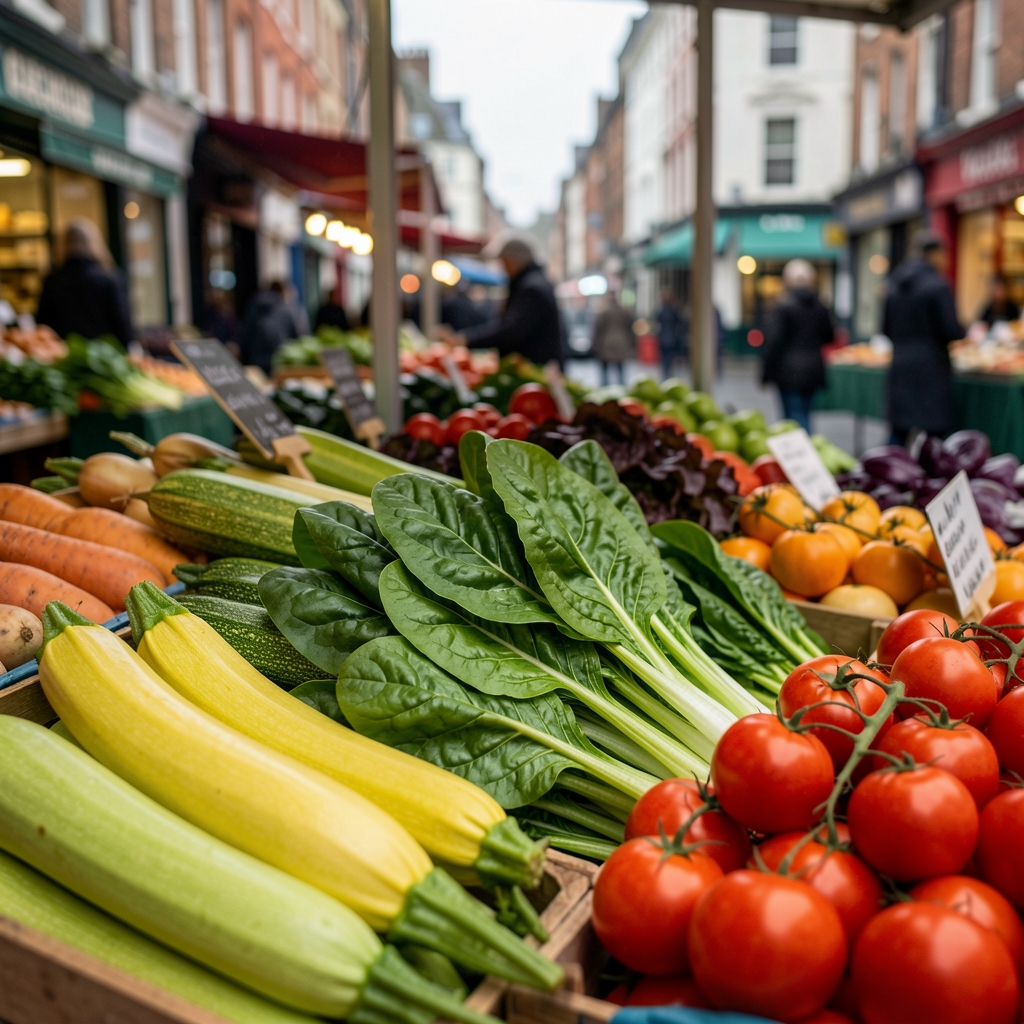
Spring arrives in the London market stalls before it arrives in the weather. The produce tells the season: asparagus in March, wild garlic in April, radishes appearing suddenly beside the winter root vegetables that have anchored the crates since October.
Why Seasonal Produce Changes the Weekly Plate
The argument for seasonal produce in a nutrition-aware kitchen is frequently made in terms of nutrient density — the idea that a vegetable eaten closer to the time of its harvest retains more of its nutritional composition than one that has spent ten days in a refrigerated container crossing Europe. This is broadly supported by published dietary research, and it is a useful frame. But it is not the primary reason that seasonal produce matters to the weekly plate, at least not from this notebook's perspective.
The primary reason is variety. A winter diet built around root vegetables — carrots, parsnips, celeriac, squash — is not a nutritionally poor diet, but it is a narrow one. The arrival of spring brings a categorical expansion of what is available at a market stall without being imported, and with that expansion comes a corresponding expansion of what can appear on the plate. Different textures, different flavours, different cooking requirements. The week's cooking becomes, almost involuntarily, more varied.
Variety in the diet, independent of any specific nutrient consideration, tends to correlate with better engagement at mealtimes. When a plate contains elements that are novel or seasonal — something that requires attention because it is not always available — the meal tends to be eaten more slowly, with more focus. This slower, more attentive eating is one of the most consistent patterns in the Branelon food journal records: spring entries consistently show more descriptive meal notes than winter entries, suggesting more deliberate engagement with what is being consumed.
Portion Awareness and the Abundance Problem
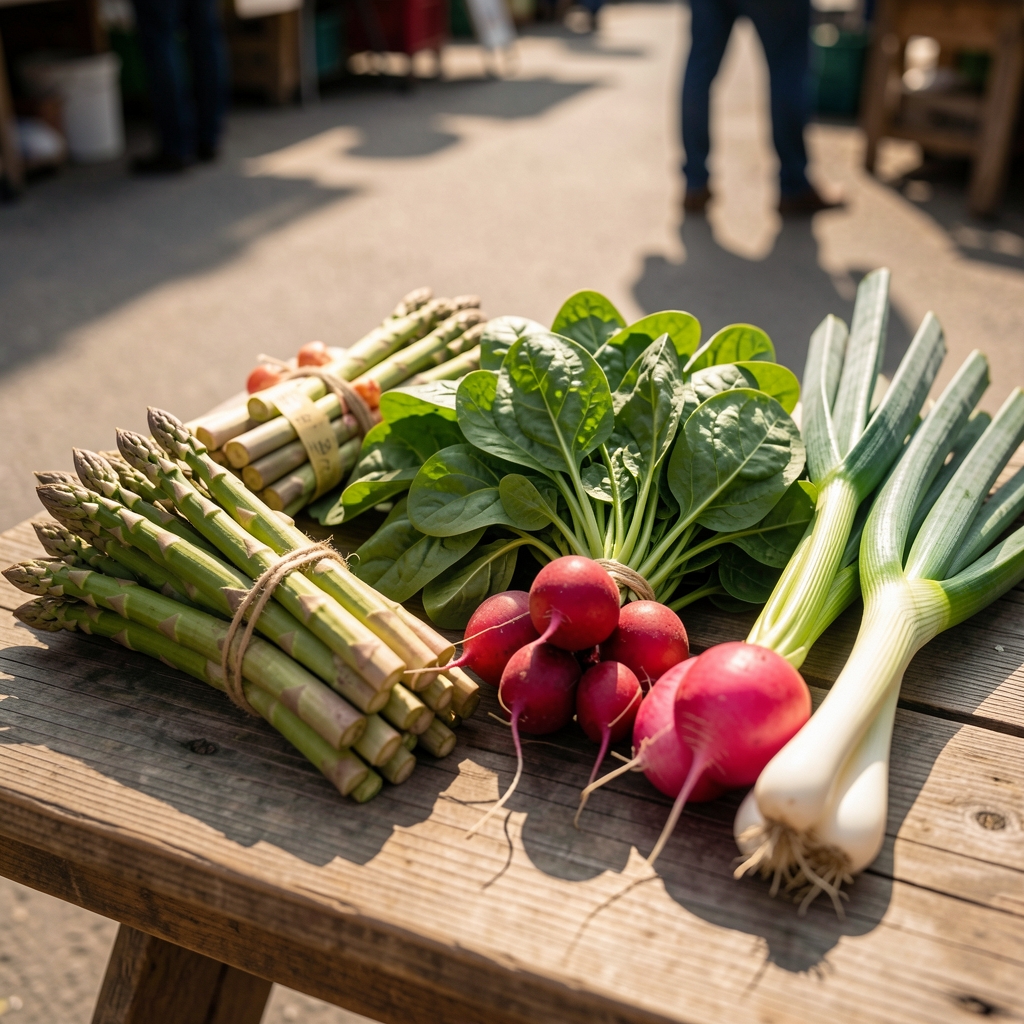
There is a particular challenge that arrives with the spring market visit: abundance. After months of a narrower winter range, the expanded availability of spring produce can make the Sunday market shop feel almost overwhelming. Broad beans, spring greens, purple sprouting broccoli, jersey royals, watercress, pea shoots — all of them arriving simultaneously, all of them well-priced and perishable. The natural response is to buy too much.
This abundance problem is worth noting because it sits in an interesting relationship with portion awareness. On one hand, the presence of a well-stocked refrigerator of seasonal vegetables tends to produce more considered meals — there is variety to work with, the ingredients are fresh, and the cooking tends to be attentive rather than perfunctory. On the other hand, when abundance leads to large volumes of perishable ingredients requiring use, the meals that result can be larger than intended simply because something needs to be finished.
The Branelon food journal records show this clearly. March and April entries frequently note larger-than-usual dinner portions, with journal-keepers citing the need to use spring greens or asparagus before spoilage. These are not meals that were overeaten through distraction or appetite; they were consciously enlarged to manage the market shop. The observation is that seasonal produce expands the variety and quality of the weekly plate at a small cost to portion consistency — and that this is, on balance, a worthwhile exchange.
"The season changes the market, the market changes the kitchen, the kitchen changes the week. That is the whole of the seasonal argument, stated plainly."
Plant-Based Meals in the Spring Kitchen
Spring is the season when a plant-based approach to meals becomes most naturally rewarding. The arrival of leguminous vegetables — fresh broad beans, peas, runner beans — alongside the leafy greens that define the season creates the conditions for complete, protein-rich plant-based meals without the effort that a winter plant-based kitchen sometimes requires.
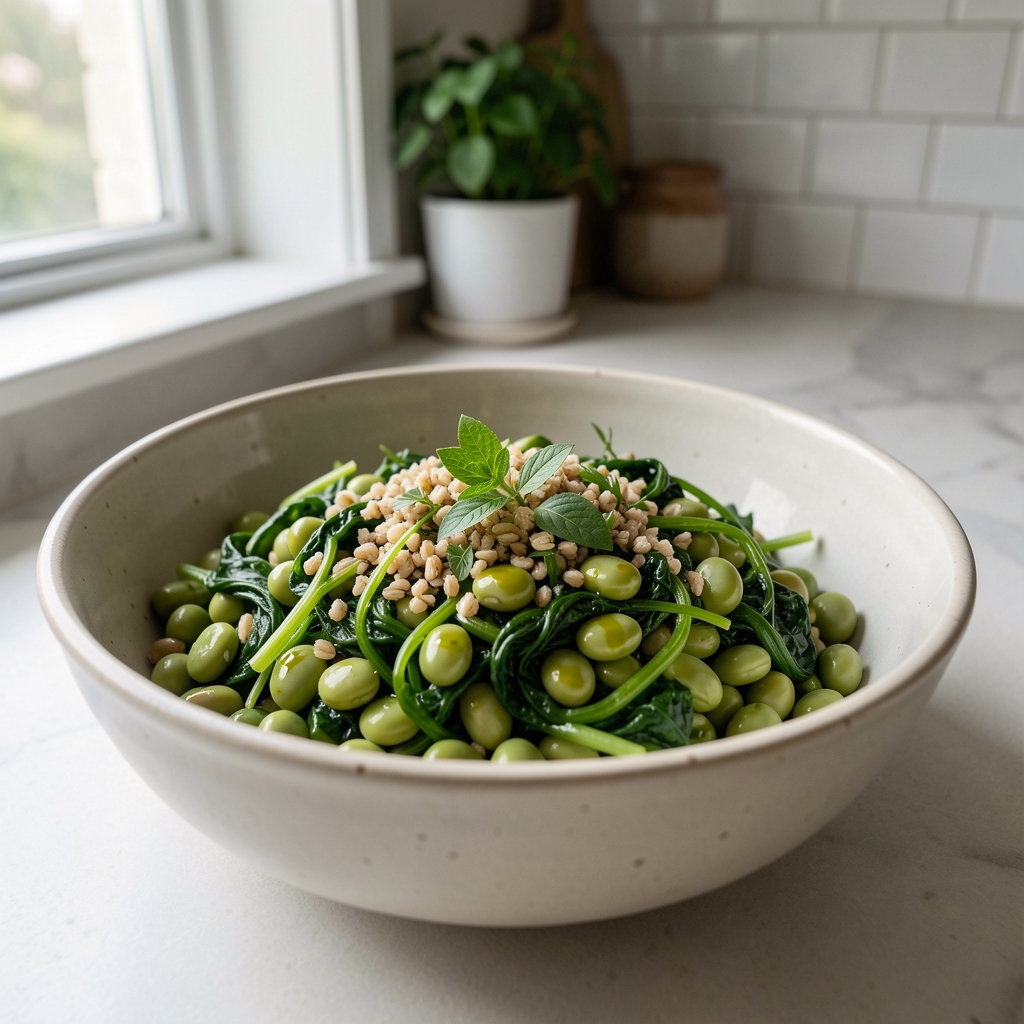
In the Branelon journal records, the proportion of meals described as containing no meat or fish consistently rises in March and April. This is not driven by any explicit dietary decision on the part of the journal-keepers; it appears to be a natural consequence of what is available and what is appealing. A spring evening meal of broad beans, pea shoots, and whole grain with a soft-boiled egg is complete, varied, and satisfying in a way that a similar winter assembly would not be, simply because the spring ingredients carry more flavour and texture.
The relationship between seasonal plant-based eating and weight is observed rather than asserted here. Across the weeks in which plant-based meals appeared most frequently — the spring and early summer records — the weight entries showed narrower variation and, on average, a slightly lower trend than in the winter months. The variables are too numerous and the sample too small for any strong claim. But the pattern is consistent enough to note.
The Weekly Food Rhythm in Transition
The transition from winter to spring is one of the most interesting moments in the annual food rhythm, because it disrupts a pattern that has been stable for months. The winter kitchen is a kitchen of long-cooked things: soups, roasted roots, slow braises. These are meals that reward planning and patience, and the weekly rhythm that forms around them is a slow one. The weekend batch-cook, the freezer as reserve, the Monday-to-Friday repetition of what was prepared on Sunday.
Spring breaks this rhythm not through any dramatic change, but through the arrival of ingredients that do not reward slow cooking. Asparagus, spring greens, pea shoots, radishes — these are things that are best eaten quickly, prepared simply, on the day of purchase. They pull the cook toward a more spontaneous approach to the daily plate. The meal becomes less a result of Sunday planning and more a response to what is freshest on a given evening.
This shift in food rhythm — from the slow, planned winter kitchen to the quick, responsive spring kitchen — is documented with particular clarity in the Branelon journal records. The entry quality changes in spring: more sensory description, more reference to improvisation, more attention to the experience of cooking. Whatever its effect on weight, the seasonal transition appears to renew engagement with the daily food practice in a way that the fixed winter routine does not. That renewal is, in itself, worth the disruption.
Spring Produce Observations
- 01 Spring produce variety naturally expands the weekly plate beyond the narrow winter range, contributing to nutritional variety without deliberate effort.
- 02 Seasonal abundance can temporarily displace strict portion consistency — an acceptable trade when the incoming variety is whole, fresh produce.
- 03 The proportion of plant-based meals rises naturally in spring and early summer, driven by produce availability rather than deliberate dietary decision.
- 04 The seasonal transition disrupts winter food rhythms in ways that appear to renew engagement with daily cooking and eating practice.
Nutritional Balance Across the Seasonal Shift
The question of nutritional balance across a seasonal shift is one that nutrition professionals and editorial writers approach differently. The professional framework tends toward quantification: are the micronutrient profiles of spring vegetables different from winter vegetables, and if so, in what ways? The editorial observation is more atmospheric: what does the spring plate look like compared to the winter plate, and does that difference feel — in the body, in the kitchen, in the weekly log — like an improvement?
Both frames have their uses. For the purposes of this notebook, the observation is that the spring plate is more colourful, more varied, and more frequently home-cooked than the winter plate, and that these qualities tend to support the kinds of eating habits — slow, attentive, composed from whole ingredients — that the Branelon editorial perspective regards as foundational to weight and lifestyle balance.
The spring produce record will continue through April and into early summer. The next instalment will look at the full spring-to-summer transition: the moment when the market stalls begin to fill with courgettes and tomatoes, and the kitchen rhythm changes again. For now, the asparagus and spring greens are sufficient. The week's plate is richer for them.